Poor workplace cleaning is often treated as a minor operational issue, but its financial impact can be much greater than expected. Unclean facilities can contribute to employee absence, damaged equipment, customer complaints and lower productivity. When maintenance problems are ignored, businesses may eventually spend more on repairs, emergency cleaning and reputational recovery than they would have spent on consistent professional service.
Higher Absence Rates and Reduced Productivity

Workplaces that are not cleaned regularly can allow dust, allergens, bacteria and unpleasant odours to build up. This is particularly concerning in busy environments where many people share bathrooms, kitchens, desks and common areas. Similar challenges are faced by organisations working with a professional school cleaning company, where high-touch surfaces and heavy daily traffic require consistent attention. Businesses and educational facilities can visit this website to review cleaning services designed for frequently used environments.
Employees may experience more discomfort when carpets, ventilation grilles and work surfaces are not properly maintained. Increased illness and allergy symptoms can lead to higher absence rates, reduced concentration and lower output. Even employees who remain at work may be less productive if they are distracted by overflowing bins, dirty bathrooms or unpleasant shared spaces.
Poor cleaning can also shift responsibility onto staff members whose roles have nothing to do with maintenance. When employees must wipe down kitchens, remove waste or deal with spills, valuable working time is lost. These interruptions may seem small, but they can become costly when repeated across a large team.
Damage to Property, Equipment and Building Surfaces
Inadequate cleaning can shorten the lifespan of flooring, furniture and equipment. Dirt and grit carried through entrances may scratch hard floors and wear down carpet fibres. Spills that are not treated quickly can leave permanent stains, while unsuitable cleaning products may damage timber, stone, glass or electronic surfaces.
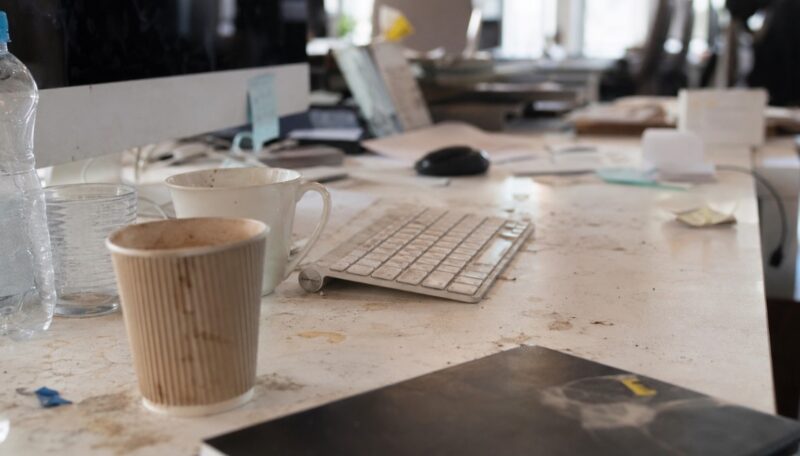
Dust can also accumulate around computers, machinery, vents and electrical equipment. Over time, this may affect performance, contribute to overheating or increase maintenance requirements. Businesses may then face repair or replacement costs that could have been reduced through regular cleaning and preventative care.
Bathrooms, kitchens and wet areas can become more expensive to restore when leaks, mould, blocked drains or damaged fittings are ignored. Routine inspections often allow cleaning teams to identify these issues early. Without regular attention, small defects may develop into larger maintenance problems that require contractors, temporary closures or significant repairs.
Reputational Damage and Unexpected Operational Costs
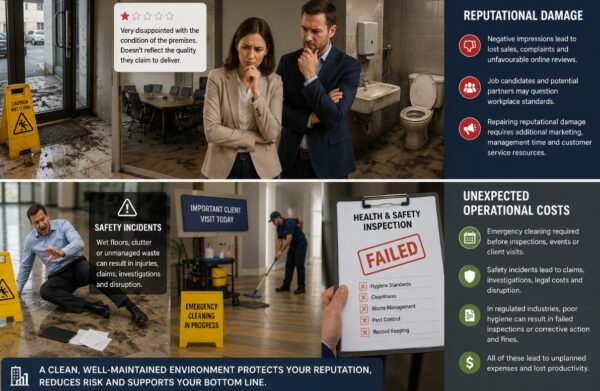
Customers and visitors often judge a business by the condition of its premises. Dirty entrances, dusty meeting rooms, stained floors and poorly maintained bathrooms can undermine confidence in the organisation. This is especially damaging for businesses that promote quality, safety or attention to detail as part of their brand.
Negative impressions may lead to lost sales, complaints or unfavourable online reviews. Job candidates and potential business partners may also question workplace standards if the environment appears neglected. Repairing this reputational damage can require additional marketing, management time and customer service resources.
Poor cleaning can also create unexpected operational expenses. Businesses may need emergency cleaning before inspections, corporate events or important client visits. Safety incidents caused by wet floors, clutter or unmanaged waste can result in claims, investigations and disruption. In regulated industries, inadequate hygiene may also lead to failed inspections or corrective action.
Conclusion
The true cost of poor workplace cleaning extends far beyond appearance. It can affect employee health, productivity, property condition, customer confidence and daily operations. Regular professional cleaning helps businesses prevent avoidable damage, reduce disruption and maintain a safer, more credible environment. Treating cleaning as a planned investment rather than a low-priority expense can protect both financial performance and long-term business reputation.