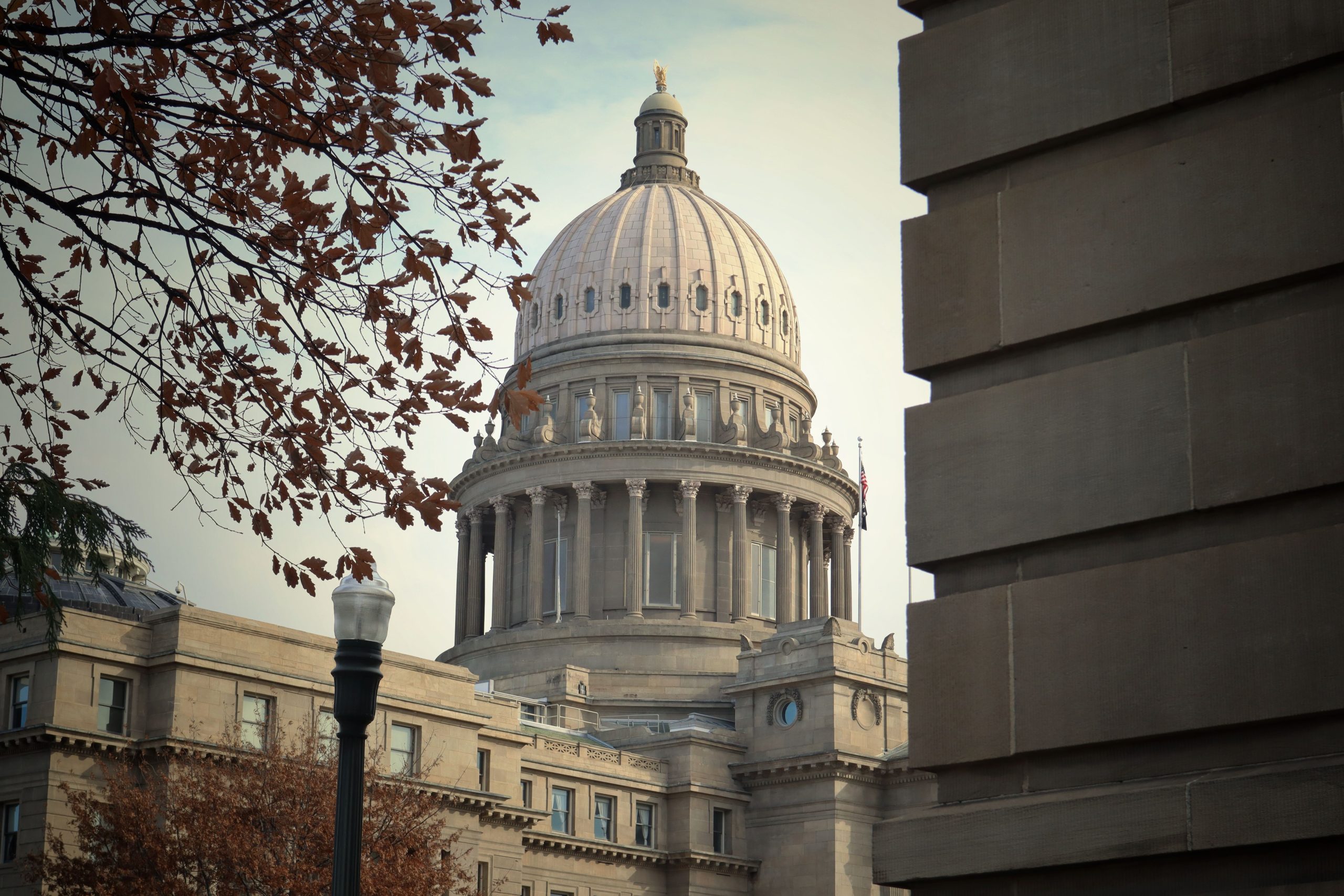
In November 2026, voters in 46 states decided more than 6,100 seats in their state legislatures, filled 36 governorships, and settled 164 statewide ballot measures. Most of those contests received a fraction of the attention directed at Congress. Yet the people elected in them will write the rules that shape how national elections are fought, what national government can realistically accomplish, and how federal policy is carried out on the ground.
State elections matter because they are not separate from national politics. They determine who draws congressional districts, which party controls the machinery of state government, and how much of a counterweight a state can act as against the federal government. In some federal systems, they even decide the composition of national institutions.
What is actually on the ballot
There are 99 state legislative chambers in the United States: every state has a house and a senate except Nebraska, which has a single unicameral body. About 7,386 state legislative seats exist nationwide, and Republicans held roughly 55% of them going into the 2026 cycle while Democrats held about 44%, according to figures from the National Conference of State Legislatures and Ballotpedia.
The biennial turnover is enormous. More than 6,100 legislative seats were contested in 2026, along with 36 governor’s races, 30 attorney general races, and 26 secretary of state races, per MultiState’s election tracking. Those offices are not ceremonial. Attorneys general can sue or decline to sue the federal government, secretaries of state administer elections, and governors sign or veto state law.

State governments regulate what Congress often does not
Most of the regulation that touches a household budget is written in state capitals. For some industries, states are the primary regulator, with insurance being the clearest example. Minimum wage, paid family leave, occupational licensing, and the rules governing data centers are largely state questions, as a Harvard Business School analysis of the 2026 state races notes.
The volume reflects it. FiscalNote’s tally, cited in that analysis, counted 135,529 state bills and roughly 28% enacted, against about 10,195 federal bills and a 2% enactment rate. State government, in other words, is where a great deal of lawmaking actually finishes.
Who draws the lines for Congress
Redistricting gives state elections their most direct national consequence. In most states, the legislature and the governor control how congressional districts are drawn. Nebraska’s unicameral legislature and North Carolina, where the governor is excluded from redistricting, are among the exceptions. Elsewhere, a party generally needs a trifecta – the governorship plus both legislative chambers – to redraw a map on its own.
In 2026, roughly ten states completed mid-decade redistricting, a pace not seen since the 1800s, according to Stateline. The trigger was a chain reaction: a 2026 U.S. Supreme Court ruling in a Louisiana redistricting case narrowed how the Voting Rights Act constrains race-conscious map-drawing, and several states responded by revising their maps before the next census. Whatever one’s view of the resulting maps, the mechanism is constant: the party that wins state elections decides the boundaries that structure future congressional races.
The trifecta effect
A trifecta – one party holding the governorship and both legislative chambers – is the state-level equivalent of unified government. It is also close to a historic high. As of late 2026, Republicans controlled 23 trifectas and Democrats 16, leaving only 11 states with divided government, according to MultiState’s state trifecta analysis.
| Control of state government | Number of states |
|---|---|
| Republican trifecta | 23 |
| Democratic trifecta | 16 |
| Divided government | 11 |
United control tends to make legislating faster. Both Republican and Democratic trifecta states enacted a higher share of their bills than divided states, according to FiscalNote data cited by Harvard Business School. MultiState ran the 2026 results in two hypothetical directions: a sweep for Democrats would produce 22 trifectas, the party’s first advantage over Republicans since 2010, while a sweep for Republicans would produce 27. The firm is explicit that these are scenarios, not forecasts, and that no single election night is likely to hit either extreme.
States as a check on federal power
When one party controls Washington, states run by the other often become the opposition. That can take the form of litigation, of declining to enforce federal priorities, or of legislating in areas Congress has not addressed. The Harvard Business School analysis describes this as a recurring pattern in American federalism: where Congress stalls, states act, and a policy adopted by a handful of states can diffuse into something that functions as a national standard.
This is part of why state attorneys general and governors are increasingly national figures even though their authority is state-bound. A governor can sign a law that changes the operating environment for employers across a region, and a bloc of states can coordinate on regulation in ways a single state cannot.
Does national politics flow back into state races?
It does, and not always helpfully. Midterm elections usually favor the party that does not hold the White House, and that tide reaches down-ballot. The Brookings Institution’s review of the 2026 governor’s races notes that wave elections reshape state contests: Republicans flipped 12 governorships in the 2010 red wave, gains that later shaped redistricting for a decade.
Special elections offer the sharpest and most contested signal. In the 2026 cycle’s special legislative elections, Democratic candidates overperformed their 2024 results by a median of about 10.4 points, according to MultiState. Whether that points to a wave is disputed. As the Stateline analysis cautions, special-election results are not necessarily predictive of general elections, in part because turnout, timing, and candidate quality vary widely from district to district.

State elections in other federal systems
The United States is not unusual in giving regional elections national weight. Germany’s upper house of parliament, the Bundesrat, is composed of the governments of the 16 federal states rather than being directly elected. Because state elections determine those governments, they also determine the Bundesrat’s balance, and the Bundesrat must consent to a large share of national legislation while also weighing in on European Union affairs. Germany’s federal government describes state elections as carrying national political significance for exactly this reason.
In Malaysia, state elections have likewise shifted which coalition governs individual states, changes that can ripple into federal politics; recent developments there illustrate how a state-level result can alter the wider political map. In parliamentary systems with strong regional parties, regional assemblies can also hold the balance of power nationally, which gives provincial voters real leverage over national coalitions.
What state results can and cannot tell you
State elections are a better guide to the rules of future politics than to any single national outcome. They generally determine who controls redistricting, state regulation, and the administrative machinery that carries federal programs into effect. They are a weaker predictor of national results, because turnout and local conditions differ from race to race.
The practical takeaway for anyone tracking politics is to read state legislative and governor’s results alongside the congressional numbers, not after them. The decisions made in a single state cycle can structure elections through the next census and beyond.
Frequently asked questions
Why do state elections matter if Congress makes national law?
Because Congress does not write most of the law that affects daily life, and because state legislature and governor races determine who draws congressional districts. State governments set insurance rules, minimum wage, and many licensing and land-use standards, and a state can act as a check on federal policy through legislation and litigation.
How many state legislative seats are up for election in 2026?
More than 6,100 state legislative seats across 46 states, according to the Institute for Business in Global Society at Harvard Business School. Thirty-six governorships were also on the ballot that year.
What is a state government trifecta?
A trifecta exists when one party controls the governor’s office and both chambers of the state legislature. As of late 2026, Republicans held 23 trifectas and Democrats 16, with 11 states under divided government, according to MultiState.
Can state elections change control of Congress?
Indirectly, and over time. The party that controls a state’s government usually controls its redistricting process, and the maps drawn after each census shape how competitive congressional districts are for the following decade. Mid-decade redistricting in about ten states in 2026 showed how quickly those lines can change.
Are state election results a good predictor of national elections?
They are an imperfect guide. State races are influenced by the national mood, but turnout, local issues, and candidate quality all differ. Analysts often treat special-election swings as a signal while cautioning that they are not necessarily predictive of general-election outcomes.
The compounding logic of local votes
A single state legislative race can look trivial: a few thousand votes, a chamber that meets for a few months, an office most voters cannot name. But state elections compound. One win changes a chamber; a chamber changes a map; a map changes a decade of congressional representation; and that representation changes what national government is able to do. National politics is not only decided under one dome in one city. It is assembled, district by district and statehouse by statehouse, in the races most voters skip.