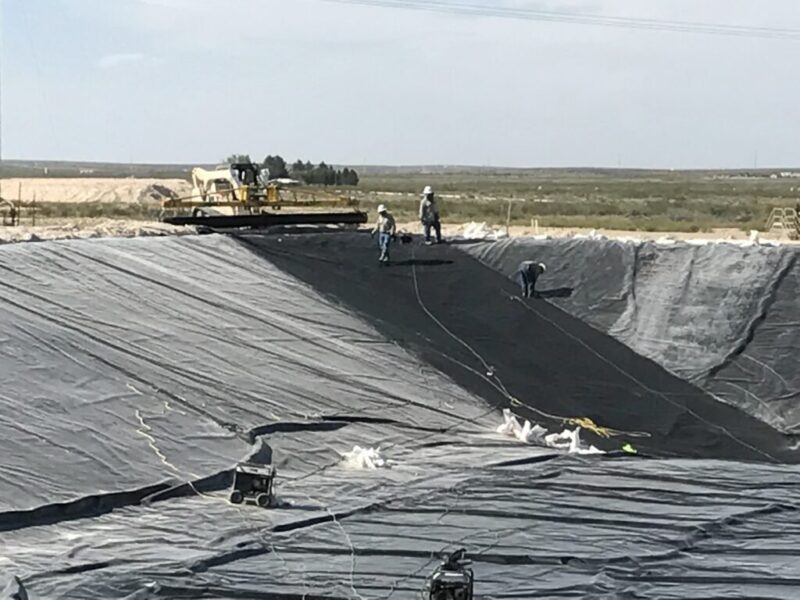
Geosynthetic liners play an essential role in landfills, reservoirs, mining facilities, wastewater ponds, and other containment systems. Although these materials are designed for demanding conditions, damage can occur during transportation, deployment, welding, or the placement of protective layers. A structured inspection and repair process helps ensure that defects are identified before the liner is covered or placed into service.
How Liner Damage Is Located
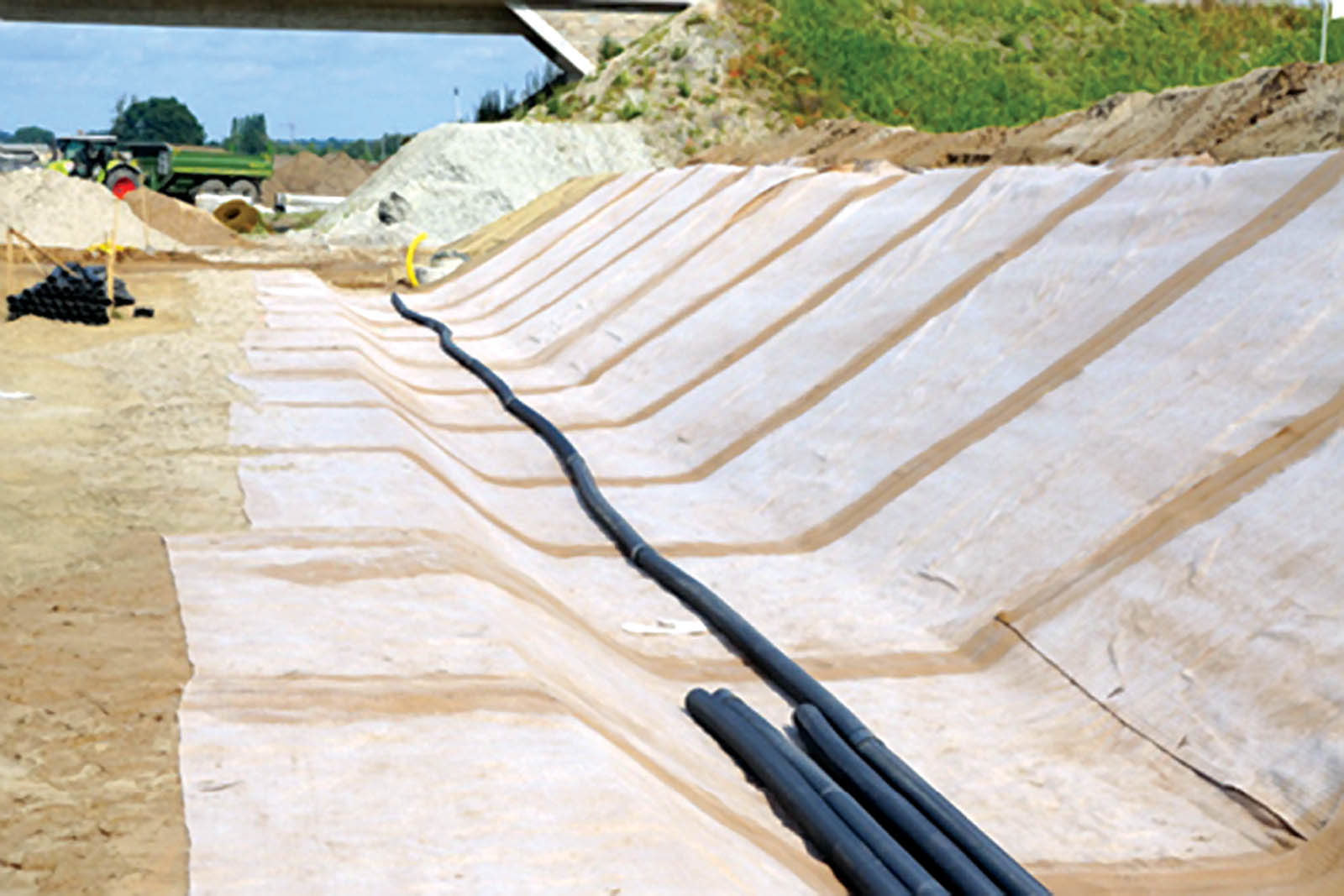
Damage may include punctures, cuts, tears, abrasion, faulty seams, or small holes that are difficult to see. Inspectors usually begin with a detailed visual examination of the exposed liner. They look for wrinkles, surface irregularities, damaged areas, incomplete welds, and signs that equipment or construction materials have affected the geomembrane.
Visual inspection is important, but it may not identify every defect. Electrical leak location methods can be used to detect openings by establishing an electrical potential across the liner. When current passes through a hole, testing equipment identifies the location so that inspectors can mark it for repair.
The selected testing method depends on whether the liner is exposed or covered, whether water is present, and whether there is a conductive layer beneath the geomembrane. Survey planning should therefore consider liner type, site configuration, construction sequence, and expected field conditions.
Learn more about geosynthetic liner and how this critical material may well require inspection and repairs.
How Defective Areas Are Repaired
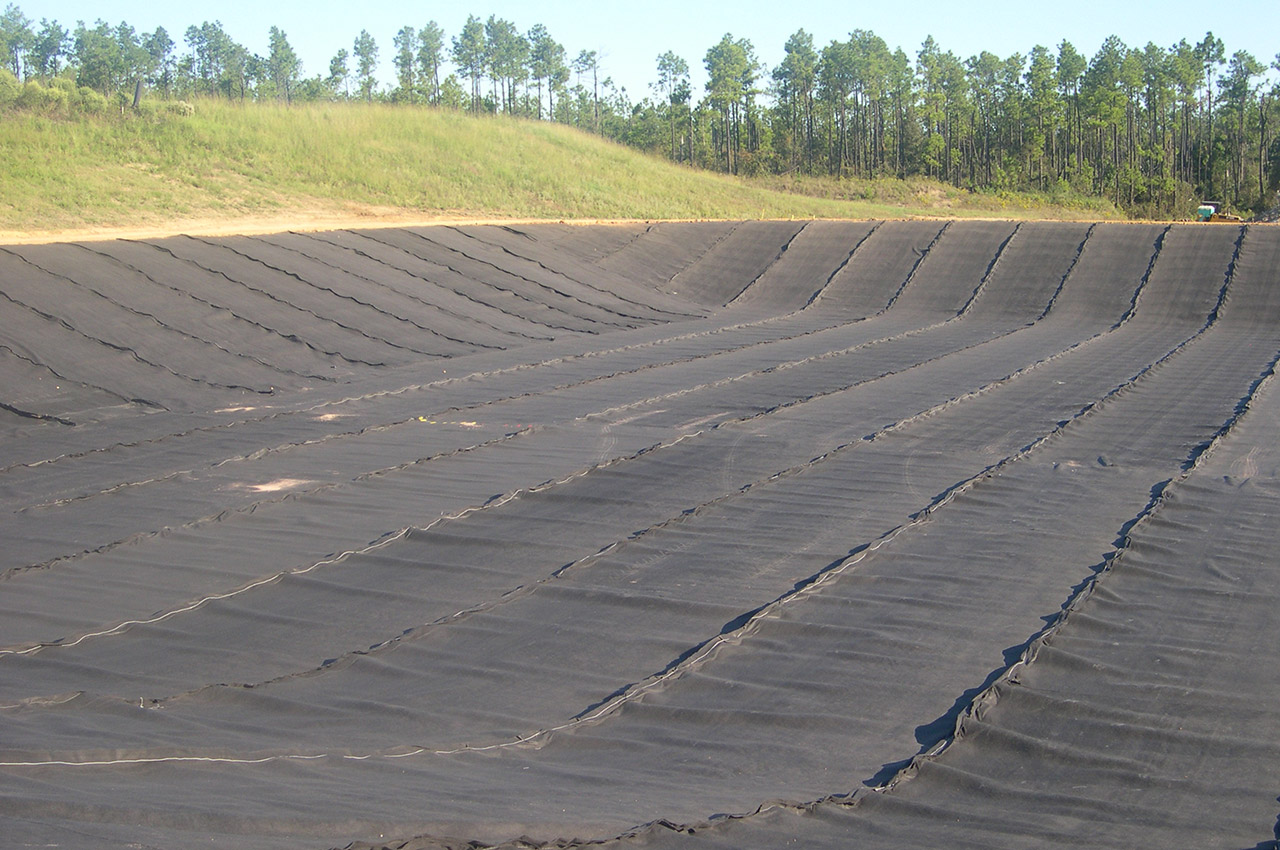
Once damage has been located, the affected area must be cleaned and prepared. Dirt, moisture, oxidation, and other contaminants can interfere with welding, so technicians need a clean and suitable surface before starting the repair. The exact method depends on the size, shape, location, and type of defect.
Small punctures may be repaired with an extrusion-welded patch, while longer cuts or tears usually require a larger patch that extends beyond every edge of the damaged area. Defective seams may need to be capped, reconstructed, or covered with additional geomembrane material. Rounded patch corners are commonly used because sharp corners can create stress concentration points.
Repairs should be completed by qualified technicians using approved equipment and procedures. Weather conditions, material temperature, and welding settings must also be monitored. Each repair is normally assigned an identification number and recorded on drawings or repair logs, creating traceability throughout the project.
How Repairs Are Tested and Documented

A repair should not be accepted simply because it appears complete. Nondestructive testing is used to check its continuity and identify channels, gaps, or unbonded areas. Vacuum box testing is commonly applied to extrusion welds and patches, while air pressure testing may be used for dual-track fusion seams.
During vacuum testing, a soap solution is applied over the repair and a transparent box creates negative pressure. Bubbles can indicate a leak that requires additional work. For pressure testing, a sealed channel between parallel welds is pressurized and monitored to determine whether it maintains the required pressure.
If a repair fails, the area is marked, corrected, and tested again. Results are documented through inspection forms, photographs, testing records, and updated liner drawings. This documentation allows owners, engineers, contractors, and regulators to confirm that every identified defect received appropriate corrective action.
Conclusion
Locating, repairing, and testing geosynthetic liner damage requires more than a basic visual check. Effective quality control combines careful inspection, suitable leak detection methods, properly executed repairs, and documented testing.
Completing these steps before the liner is covered can prevent leakage, environmental harm, construction delays, and expensive excavation. A verified repair process ultimately protects the containment system and provides confidence that the installed liner can perform as intended.